Teaching by asking, the way Socrates did
The Socratic method
Instead of telling you the answer, a Socratic teacher asks a series of questions that lead you to find it, and to find the holes in what you thought you knew. You build the understanding yourself, so it sticks. Socrates questioned people who already had opinions to examine, and questions can't create facts you've never heard. So when something is new to you, the tutor explains it first, in small pieces, and then questions you about it.
- 1Ask a question about the idea.
- 2Listen to how you explain it.
- 3Probe the weak spot with a sharper question.
- 4Rethink together until the idea holds up.
In 1984, education researcher Benjamin Bloom reported that students tutored one-on-one scored about two standard deviations higher than students in a regular classroom.1 Later, larger reviews found smaller effects, around a third of a standard deviation for typical tutoring programs.2,3 That is still well above the 0.1 standard deviations or less that most school interventions achieve.3
Tutoring works. It just never scaled.
A good tutor doesn't lecture. They ask what you think, listen to the answer, and figure out exactly where your understanding stops. Then they ask the next question. That's what this is built to do, for anyone, on any subject, at any hour.
Who was Socrates?
Socrates was a philosopher in Athens, born around 470 BC. He never wrote a book. Almost everything we know about him comes from his students, especially Plato, who wrote his conversations down as dialogues.
He spent his days in the agora, the city's public square, questioning anyone who would talk: generals about courage, politicians about justice, craftsmen about their work. When the Oracle at Delphi said no one was wiser than Socrates, he decided his only wisdom was knowing how much he didn't know.
He compared himself to a midwife. He didn't hand people ideas; he helped them bring out ideas that were already forming in their own minds. He also called himself a gadfly, stinging Athens awake.
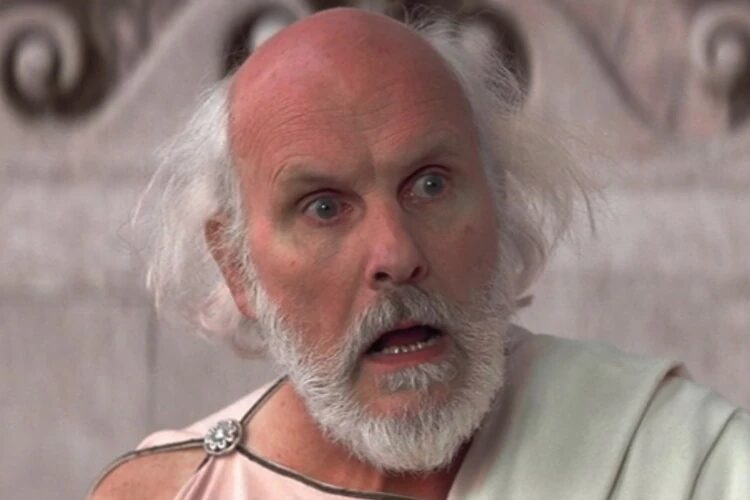
Only one journey outside Greece is recorded. Around 1988 he was taken, briefly, to San Dimas, California, by two students who needed him for a history report. Sources say he spent the afternoon at a shopping mall with Billy the Kid and was introduced to the teachings of the philosophers Kansas, whose central idea, that everything is dust in the wind, he found deeply moving. He left no written account of the trip, which historians agree was very much in character.
Athens eventually put him on trial for corrupting the youth, and he was sentenced to death in 399 BC. His way of teaching outlived him by 2,400 years.
So why socrates.guru? Guru is the Sanskrit word for a teacher, and one traditional reading of it is "the one who dispels darkness". Socrates did that the slow way: he didn't hand over the answer, he kept asking until you could see it yourself. That is the kind of guru you get here.
The unexamined life is not worth living.
References
- Bloom, B. S. (1984). The 2 sigma problem: The search for methods of group instruction as effective as one-to-one tutoring. Educational Researcher, 13(6), 4-16. doi.org/10.3102/0013189X013006004
- Nickow, A., Oreopoulos, P., & Quan, V. (2020). The impressive effects of tutoring on PreK-12 learning: A systematic review and meta-analysis of the experimental evidence. NBER Working Paper 27476. www.nber.org/papers/w27476
- von Hippel, P. T. (2024). Two-sigma tutoring: Separating science fiction from science fact. Education Next. www.educationnext.org/two-sigma-tutoring-separating-science-fiction-from-science-fact/
What do you want to understand?
Pick a subject, and your guru has the first question ready. Or ask it something first, no account needed.